Have you ever thought about how green your food is? And I don't mean the green stuff growing on last month's leftovers that you have shoved in the back of your fridge...
Eating green is all about knowing where your food comes from. How was it produced and how did it get to you? To eat green, you need to find the answers to these questions...
Did you know that if you purchase local produce (within 12 miles of your home), you will be doing more for the environment than if you purchased organic food from farther away...
If you think about how far your food has traveled, then you have to think about all the nutrients that food has lost. The sooner you eat your harvested food the more nutrients you get.
Local farmers' markets are a wonderful place to buy your vegetables. The farmers are usually passionate about the food they have grown and they are usually willing to let you taste things that you might not have ever tried before.
So try a farmers' market in your area and see how good something close to home can taste...Hugs...
Showing posts with label Living Green. Show all posts
Showing posts with label Living Green. Show all posts
Tuesday, April 28, 2009


Tuesday, April 21, 2009
Tuesday's green living tips
I decided, since it was Earth Week, to give you a link to some quizzes so that you can see how "Green" you really are:
***I also want to thank everyone for their support on this horrible, horrible 'thing' that is trying to go into my neighborhood...The latest is: The town next to mine voted to against them coming in...my town voted to get more information...argh!!! We have another meeting tomorrow night with the neighbors and others who are against it...right now we are looking at having over 300 people there...none of us are giving up, but it would be nice if the people that we voted into office would listen to us...sigh...
- Are you an Eco-Friendly Eater? Quiz
- What's the Footprint of your Food? Quiz
- How Green is Your Garden? Quiz
- How Green is Your Wardrobe? Quiz
- Know the History of Earth Day? Quiz
***I also want to thank everyone for their support on this horrible, horrible 'thing' that is trying to go into my neighborhood...The latest is: The town next to mine voted to against them coming in...my town voted to get more information...argh!!! We have another meeting tomorrow night with the neighbors and others who are against it...right now we are looking at having over 300 people there...none of us are giving up, but it would be nice if the people that we voted into office would listen to us...sigh...
Tuesday, April 14, 2009
Tuesday's green living tips
Today I thought I would share (what I think is) an easy way to understand Greenhouse gases...
A simple definition of greenhouse gases (water vapor, carbon dioxide & methane) is: Essential gases that help determine the Earth’s temperature. Basically, if we had no greenhouse gases, the earth would be too cold for anything and/or anyone to live.
So how does all this work?
Let’s say you want to go outside and play in the snow.
You layer your shirts and pants (2 or 3 of each) and then when you are ready to go outside you put on a coat. That coat keeps that warmth inside. Just like the atmosphere does the earth.
Atmosphere = coat
Now you get outside and you get running around and playing and you start to sweat under your coat, because you have that extra warm clothing which is keeping the heat you are generating by playing from escaping. Just like the greenhouse gases do.
Greenhouse gases = clothing
Water vapors = sweat
Too much clothing under your coat traps your heat, causing you to sweat.
Too many greenhouse gases under the atmosphere traps the heat causing the Earth to sweat. The more the Earth sweats, the harder it is to cool it off.
Our atmosphere helps keep the warmth inside so that we can live on Earth. The atmosphere allows just the right amount of the Sun’s heat in, and then it doesn’t let the heat escape completely. It only allows enough heat to escape to keep it a comfortable temperature for us to live in.
70% of the Sun’s rays warm up the land and the oceans. As they warm up they give off heat, which in turn warms us up.
But when our atmosphere gets in the way, we have the greenhouse effect. Which means the greenhouse gases (water vapor, carbon dioxide and methane) trap the heat that should be escaping and makes it hotter on Earth.
Believe it or not, having some greenhouse gases is a good thing.
So let’s say you only had on one shirt and pair of pants and your coat on when you go outside. You go out and play. You sweat a little because of your coat and the light layers of clothing are keeping you warm but not overly heated.
This is what carbon dioxide and methane basically do. They trap some of the heat and this keeps us from having another ice age. The problem is, we are creating too much carbon dioxide and methane (or wearing too many clothing). And this is causing extra heat to be trapped inside which causes a chain reaction…polar ice to melt, wilder weather, etc. (or making too much sweat).
So if we need some greenhouse gases (carbon dioxide, methane and water vapors) but we have too much of them, what can we do?
Water vapors (which trap 4 times as much heat as the other two greenhouse gases) are harder to get rid of because it does trap so much heat. So we need to concentrate on reducing the amount of carbon dioxide and methane in the air.
Some ways you can help reduce the greenhouse gases:
**Change your light bulbs to Compact fluorescents (CFLs)…you will be keeping 300 lbs of carbon dioxide out of the atmosphere…
**Turn your thermostats up 2’ in the summer and down 2’ in the winter than you usual have it set…this will keep about 2,000 lbs of carbon dioxide out of the atmosphere…
**Cool off your shower temperature and make your showers shorter. (keeping 350 lbs of carbon dioxide out of the atmosphere)
**Wash your clothes in cool water. (saves 500 lbs of carbon dioxide)
**Hang your clothes up to dry instead of putting them in the dryer. (700 lbs of carbon dioxide saved)
**If you would recycle just half of our garbage this would help. (2,400 lbs of carbon dioxide can be saved)
**Turn off the t.v., computer, CD player, etc. when you aren’t using them. (3,000 lbs saved)
**Start unplugging items. When you aren’t using your blow dryer or curling iron, unplug it. If your cell phone isn’t on the charge, then unplug it. And you can help save almost 18 million tons of carbon dioxide from getting into the atmosphere by unplugging anything that has a display clock (microwave, VCR’s, etc.)
**Buy local…The less traveling you do to get your food can save 1,000 lbs of carbon dioxide) Buying from your local fruit markets, etc will cut down on how far your food has traveled to you also.
**Take the bus or ride your bike to work. If you can reduce the amount of driving you do by 10 miles a week can get rid of 500 lbs of carbon dioxide in the atmosphere.
Plant a tree…a single tree can absorb 1 ton of carbon dioxide in its lifetime. If you are in any type of club, contact your local park and see if you can plant a tree in the park. Most localities will be happy to let you do this. You can purchase a tree and they will show you where to plant it (and most will even dig the hole for you)…this is great publicity for your group and you are helping the environment. So go one...Plant a tree!
Tuesday, April 7, 2009
Tuesday's green living tips
I'm back! It was tough not to turn the computer on this past week and without the computer, I wanted the t.v...argh! But Hubs and I decided we would 'court' each other this past week to make it go faster and it did...actually it went so fast that here it is Tuesday and I'm just now getting around to posting...grin...It was a nice vacation, but I'm glad to be back...and I will be catching up as soon as I can on everyone's blogs...I've missed you guys!
Now for Tuesday's Green Living Tip:
Do you know how much garbage your and your family have each day? Week? Month? Year?
Here’s a little ‘garbage’ experiment for you and your family to try for a week. Hopefully, by doing this you will be able to see where you can reduce your garbage so that it doesn’t end up in a landfill.
What you need:
Large plastic garbage bags
Permanent marker
Gallon-sized Ziploc plastic bags
Latex gloves
Scale
Tips:
Maybe you can have a contest of sorts within your family. If a shampoo container has been thrown away, see who can find another use for it…the one with the best answer could win choice of dessert for dinner the next night or something simple like that.
If no one can think of an idea for reusing the container, etc. then make sure you recycle it. Sort through the items and divide them up so that you can take them to the recycling bin.
Happy Green Living!!
Now for Tuesday's Green Living Tip:
Do you know how much garbage your and your family have each day? Week? Month? Year?
Here’s a little ‘garbage’ experiment for you and your family to try for a week. Hopefully, by doing this you will be able to see where you can reduce your garbage so that it doesn’t end up in a landfill.
What you need:
Large plastic garbage bags
Permanent marker
Gallon-sized Ziploc plastic bags
Latex gloves
Scale
- To be able to have success with this experiment you will have to get your entire family involved. Let them know it is only for one week. If you have two large trash cans, you can put a large plastic garbage bag inside each one. Make sure your family knows that one trash can/bag is for “food items” (banana peels, orange rinds, meat bones, scraps from your plates that weren’t eaten, etc.) and the other trash can/bag is for “dry garbage” (such as empty food boxes, cans, shampoo bottles, toothpaste tubes, etc.)
- You and your family will be dividing your trash up for one week into these two trash bags/cans.
- Hand out two Ziploc plastic gallon-sized bags to each member of your family (and don’t forget to take one for yourself).
- This is where they are going to put any and all trash that they have during each day. Any left over lunch, etc. goes into one bag and any non-food trash goes into the other bag.
- Have them bring home these bags each day so that you can make sure everything is in the correct bags.
- Open the Ziploc bags and pour the contents into the correct trash can/bag. Rinse out the Ziploc bags and let them dry so that you and your family can use them again tomorrow.
- When your week is up, you will want to weigh yourself. Then take the trash bag with the food items in it and weigh yourself again while holding this bag. Subtract your weight from this total and write that amount down on paper. Now weigh yourself while holding the non-food trash bag, subtract your weight again and write that amount down.
- Now add those two amounts together and this is the amount of trash you and your family use in a weeks time. Now multiply that amount by 52 (the number of weeks in a year) and that is the amount of trash you and your family are contributing to the landfills.
- Put the latex gloves on and go through the trash (I know this isn’t pleasant, but it is necessary). See if there is anything in the trash bag that you could have used again. Wash out canned food cans and with the help an adult you can poke holes around the can and put a candle inside. Now you have a luminary. Or they can be cleaned, painted and decoupage them to make pencil holders or a flower.
- As for the food items, do you or a family member like to garden, if you answered yes, then why not try to compost those food scraps to help your garden grow.
- Also, by going through your trash and really get up close and personal with it, you might see ways that you can cut back on some of the non-food items. Do you buy your meats in the cute little plastic containers? That plastic has to come from somewhere…Why not get your meat cut at the deli in the grocery store. Take along a container from home for them to put the meat in after weighing it. This way, you don’t have anything to throw away. No plastic container and no meat wrapping. (Check with your grocery store to see if they will allow this, some bigger chains might not).
- And what about that ‘food items’ trash bag…how much food did you and your family waste during the course of a week? Did you throw out bananas because they got too ripe? Did you only eat half a sandwich? This might just help you figure out that you need to not buy so much at one time. Or if you notice that bananas are being thrown away because they keep getting too ripe before anyone will eat them, then why not find a recipe to put the very ripe bananas in. This way, you will still be able to eat them and they won’t go to waste.
Tips:
Maybe you can have a contest of sorts within your family. If a shampoo container has been thrown away, see who can find another use for it…the one with the best answer could win choice of dessert for dinner the next night or something simple like that.
If no one can think of an idea for reusing the container, etc. then make sure you recycle it. Sort through the items and divide them up so that you can take them to the recycling bin.
Happy Green Living!!
Tuesday, March 31, 2009
Tuesday's green living tips
Hello all... Today's Green Living tip is going to be about cleaning (because this is probably what I am doing a lot of since I'm not reading blogs and playing on the computer...sigh)
So what about them there bathrooms? Do you hate soap scum? Who doesn't...but if you don't have time to clean your shower walls and tub after each use, then you are likely to get soap scum at some point in time. So here's some very easy, natural, non-harsh chemical ways to clean that soap scum:
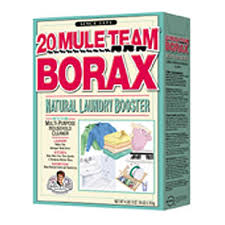
Borax (which can be found with the laundry detergent) can act as a nonabrasive cleanser. You can use it on fiberglass, porcelain, or enameled finishes. Just wet the area you want to clean, sprinkle a little borax on a stiff scrub brush and use a little elbow grease.
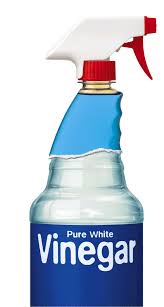
Vinegar (you need to keep vinegar on hand at all times! It is the all-purpose cleaner and so much more. Usually, white vinegar is what is used most for cleaning). Hot vinegar mixed with a little elbow grease will clean soap scum off a tub/shower wall. Here's a two for one: If you heat your vinegar in the microwave, you can also clean your microwave at the same time.
Apply the hot vinegar with a sponge or rag and then scrub with a hard bristled brush. I usually pour my hot vinegar in a spray bottle and spray the walls down first and let that soak through the soap scum while I heat more vinegar to wipe down the walls with a sponge. This seems to help cut through the soap scum better.
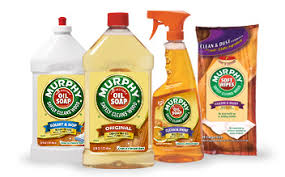 Heated Murphy's Oil Soap applied with a stiff scrubbing brush and some elbow grease will remove large quantities of hardened soap scrum (like right under where you keep your bar of soap). The best part about using the Murphy's Oil Soap is that it seems to prevent soap scum build-up for about 3 weeks...which means less cleaning or you.
Once you get the area cleaned well, apply with a soft cloth that has been dampened the Murphy's Oil Soap and water. Be VERY careful not to get the Murphy's Oil Soap on the floor of your tub/shower. This is an 'oil' and can be very slippery. Make sure you 'buff' the walls to remove as much of the oil as you can.
Question: "But all I have to do with the store bought harsh chemicals, is spray, wait and rinse. Why would I want to use something that will cause me to have to use elbow grease?"
Answer: Because these products aren't harsh chemicals. So they are safer for the environment, your family and yourself...and heck, why not build them muscles up at the same time...grin...
Happy Cleaning! Hugs...
picture credit:
Borax - Vinegar - Murphy's Oil Soaps
So what about them there bathrooms? Do you hate soap scum? Who doesn't...but if you don't have time to clean your shower walls and tub after each use, then you are likely to get soap scum at some point in time. So here's some very easy, natural, non-harsh chemical ways to clean that soap scum:
Borax (which can be found with the laundry detergent) can act as a nonabrasive cleanser. You can use it on fiberglass, porcelain, or enameled finishes. Just wet the area you want to clean, sprinkle a little borax on a stiff scrub brush and use a little elbow grease.
Vinegar (you need to keep vinegar on hand at all times! It is the all-purpose cleaner and so much more. Usually, white vinegar is what is used most for cleaning). Hot vinegar mixed with a little elbow grease will clean soap scum off a tub/shower wall. Here's a two for one: If you heat your vinegar in the microwave, you can also clean your microwave at the same time.
Apply the hot vinegar with a sponge or rag and then scrub with a hard bristled brush. I usually pour my hot vinegar in a spray bottle and spray the walls down first and let that soak through the soap scum while I heat more vinegar to wipe down the walls with a sponge. This seems to help cut through the soap scum better.
Heated Murphy's Oil Soap applied with a stiff scrubbing brush and some elbow grease will remove large quantities of hardened soap scrum (like right under where you keep your bar of soap). The best part about using the Murphy's Oil Soap is that it seems to prevent soap scum build-up for about 3 weeks...which means less cleaning or you.Once you get the area cleaned well, apply with a soft cloth that has been dampened the Murphy's Oil Soap and water. Be VERY careful not to get the Murphy's Oil Soap on the floor of your tub/shower. This is an 'oil' and can be very slippery. Make sure you 'buff' the walls to remove as much of the oil as you can.
Question: "But all I have to do with the store bought harsh chemicals, is spray, wait and rinse. Why would I want to use something that will cause me to have to use elbow grease?"
Answer: Because these products aren't harsh chemicals. So they are safer for the environment, your family and yourself...and heck, why not build them muscles up at the same time...grin...
Happy Cleaning! Hugs...
picture credit:
Borax - Vinegar - Murphy's Oil Soaps
Tuesday, March 24, 2009
Tuesday's green living tips
This weeks green living tip is a simple little craft that I think young children (or even those young at heart) will want to do.
Green living means that you find better ways to use things...or rather...reuse them. And this project takes that idea and runs with it...or maybe I should say...slithers with it...
What you need for your door draft snake:
Old ties
rice
fabric glue
wiggly eyes
What you do:
Have you reused something today in a way that it didn't start out as? tie = snake
Hugs...
Green living means that you find better ways to use things...or rather...reuse them. And this project takes that idea and runs with it...or maybe I should say...slithers with it...
What you need for your door draft snake:
Old ties
rice
fabric glue
wiggly eyes
What you do:
- Put some fabric glue on the smaller end of the tie, and then put something heavy on top and let it dry overnight. This will seal it up that end so that your rice doesn't escape. You can also tie a knot or sew it up if you want.
- Pour the rice into the tie (don't over stuff it, but put enough to give your "snake" some life.
- Take the "flap" of the big end of the tie and close it up using the fabric glue or stitching it up...you don't want to tie this end into a knot.
- Glue the wiggly eyes on the large end to finish off your snake.
Have you reused something today in a way that it didn't start out as? tie = snake
Hugs...
Tuesday, March 3, 2009
Tuesday's green living tips
Before I get into my green living tip, I have to tell you guys about a wonderful surprise that I got in the mail. A few days ago, I got this package in the mail...I thought it was something I had ordered, so I didn't really pay much attention and I didn't open the box...then I get this other box, so I look at it and the 2nd box was what I had ordered, so I thought I had better see what was in the first box was...Well it was from WOW (Women On Writing)...
I didn't know this but I had won an honorable mention for my story "Memories" in their Summer 2008 Flash Fiction contest...I hope it is okay, that I'm going to post my entry here on my blog (I looked and didn't see it anywhere on their site, so I hope that means it still belongs to me...)
So here is my Honorable Mention story:
Memories
Laughter was the only hint someone was in the corner booth. The high wooden panels had concealed the occupants into a world of their own. The residents were two sisters remembering a lifetime in one afternoon.
"Do you remember when..." and "How about the time..." floated through the air, mixing with the cigarette smoke in the restaurant. Emotions and memories took them on a carousel ride through the ups and downs of their childhood. Their public time machine filled with smiles and tears from a more innocent time in their lives.
Food, ordered hours before, was cold from too much talking and not enough eating. Silence only came when they stopped talking to catch their breath.
Soon the memories slowed and the tears and laughter were gone. They sat for a moment, caught up in how far their lives have come since actually living those memories. And in that moment, they grew up. Adults again. Their responsibilities were too many to remain in their childhood.
They did not hate where life had taken them. Both were in marriages that made them happy. Both had children they loved. Each of them were building new memories with families of their own. They just needed a day of childhood memories, so they would feel young again.
Neither wanted to leave the shelter that had brought them uninterrupted time for their past, but they knew it was time. It was time to return to the world of today and leave the world of yesterday behind them.
Together they walked toward the front of the restaurant. Each step took them further out of their childhood and back into the world of making dinners and paying bills. Each step took them closer into the world of grown-up things.
The closer they got to the door, they realized the weather had changed. Without words, the sisters looked at each other and knew. Fate had given them one last chance to let the little girls inside them play.
The doors opened and with a burst of giggles they stepped once more into the past, and they danced in the rain.
Okay...back to the green living tips...
Everyone is learning about their carbon footprint these days, but have you ever thought about your pet's carbon pawprint?
Here are some tips on decreasing your favorite pet's carbon pawprint:
- Shampoo your pet with natural things instead of the harsh shampoos from the stores...an old sock with 1/2 cup of old fashioned oatmeal (dry) poured inside and then the end tied shut makes a wonderful natural 'soap' bath for your pet. Run water into the tub, sink, etc dip your oatmeal sock in the water and then wash your pet with it...the oatmeal is great for your pet's skin and makes their fur soft...
- Cook for your pet...did you know that they classify the animals that make up your dog's food as 4-D...this means: they are “Dead, Dying, Diseased, or Down (Disabled)” when they line up at the slaughterhouse - Cook Real Food for Your Dog
- Last but not least...lets talk about your pet's poop - cats and dogs create 10 million tons of waste a year that ends up in the landfills - Lower your pet's carbon pawprint
Tuesday, February 17, 2009
Tuesday's green living tips
Moving a 15 year old pine tree that has fallen on your house, takes a lot of work...not to mention back power...so today's natural cure is going to be for backaches...


- Making a paste from meat tenderizer and water can be rubbed into your back as you would an over-the-counter back rub. It will help ease the pain in your back.
- French's mustard rubbed into your back or empty a bottle of mustard into a bathtub filled with hot water. Mix well and soak in the mustard bath for 15 minutes.
- Pour 2 cups of rice into a microwave-safe container and heat in the microwave for one minute. Carefully pour or spoon the hot rice into a sock. Make sure it is not packed tightly in sock. Tie a knot or sew up the end of the sock. Put the warm sock on your back where it hurts for 10 minutes to help relieve the pain.
- Another use for bubble wrap is to make a back pillow. Cut rectangular sheets of bubble wrap and put them into an empty pillowcase. Place the bubble wrap pillow behind the small of your back when sitting in an office chair, riding in a car, etc.
- Have your partner roll a sock that is filled with three or four tennis balls over the sore area on your back.
Tuesday, January 27, 2009
Tuesday's Green Living Solutions
Today's Green Living Solutions is going to be a hodge podge of things...My mind is going a thousand miles a minute in all different directions, so I just couldn't concentrate long enough on one thing...
Laundry:
Did you know that if you over dry your clothes in the dryer, that you are more likely to get static cling. Even if you use a fabric softener or dryer sheets. The friction from your clothes tumbling in the dry is what causes this. So, try not to over dry your clothing. This will not only help save you money on energy costs, but it will help your clothes last longer. Set your dryer to the lowest temperature and the shortest time dry...
Bathroom:
Think about this...The bathroom is where we start our days (I know I need a shower to wake me up in the mornings) and the bathroom is where we end our days (brushing our teeth, cleaning off our make-up, etc)...So don't you find it strange that the room in which we clean ourselves is not that clean...and I'm not talking about the soap scum in the bathtub. I'm talking about the chemicals that we use each day in this room...shaving cream, hair spray, cleaners, etc. Not to mention the fact that we have become a "disposable world"...disposable razors, disposable cleaner wipes, disposable toilet bowl cleaner scrubby thingies (I hope I don't throw anyone off with my technical terms...grin)...
The point is that we can be much "cleaner" to our earth, if we stop being so disposable. The only item in your bathroom that should be disposable is the toilet paper. After every shower, wipe down the shower walls and doors with the wash cloth you just used...you will be washing that cloth later and the only thing you are wiping down is the water and soap that has been left behind. If you could get every member to do this after their showers, you wouldn't need such harsh chemicals during those monthly top notch cleanings...A little vinegar will help with the soap scum...Rags instead of pop-up throw away rags work better. They don't tear and they last longer. And what would your mother-in-law say if she saw that disposable brush you use to clean your toilet! That thing can't clean as well as her old toilet bowl brush and her son's bum is too good to sit on a dirty toilet! Then he should stop being the one to tinkle all over it...but that is another blog day...grin...
Yes, disposable was nice and yes they don't make things like they use to, but what happened to a little elbow grease...Did you know you can burn something like 130 calories an hour cleaning...So toss those disposable items and use a little elbow grease...the earth will feel better and so will you...
Hugs...
Tuesday, January 20, 2009
Tuesday's Green Living Solutions
Last night I was going through my closet looking for a sweater that I knew I had, but couldn't find. I tore through hanger after hanger of clothes that I haven't had on in years and that's when it hit me...I need to recycle these clothes. Most of them were in good shape, and some not so good. I pulled everything out of my closet and divided the clothes up...
Well, today I spent a little time searching for things to do with my old clothes and this is what I've found:
Well, today I spent a little time searching for things to do with my old clothes and this is what I've found:
Organize a clothes swap.
- Invite your friends & ask your friends to invite their friends
- About 10-15 people is the goal - aim for all shapes & sizes
- If you are hosting the swap at your house, make sure you have at least two full-length mirrors available
- For those of us who are modest, make sure there are other rooms available to dress and undress. If this isn't possible, remind people they can wear a body suit or bathing suit underneath their clothing if they wish.
- Clothes swaps can be seasonal, but they don't have to be: The best clothes swaps have all seasons clothing.
- If two people want the same item, you can have fun with this by either a coin toss, or have a friendly little bidding war or having each person model the item of clothing and have a vote (do this only if you're sure there won't be hard feelings).
- If you have second thoughts about an item you have up for grabs - speak up quickly. A simple "Hmm, I'm not so sure I'm ready to give that up yet," should suffice, before someone else gets too attached to the item.
- Be prepared - for a good time! You'll be surprised how much fun you'll have with a group of women trying on clothing!
This would work just as well with children's clothing, and don't forget your hubby's clothes...
Tuesday, January 13, 2009
Tuesday's Green Living Solutions
Junk Mail! Don't ya hate it...Talk about something that takes away from the earth...Did you know 100 million trees are cut down just to cover the paper and envelopes that make up junk mail...
So here are some green living solutions for getting rid of your junk mail!
So here are some green living solutions for getting rid of your junk mail!
- Open up the credit card offers you get and take out the postage-paid envelope. Take all the junk the credit card company sent you, and stuff it into that return-to-sender envelope (including the original envelope). Pop it back into the mail. The company paid that postage, so it's paying to receive its own garbage back! Maybe if enough people did this, credit card companies would think twice about spamming us with endless offers for cards we don't need.
- Of course, you can also try to get off the lists in the first place. Four of the major consumer credit reporting companies who are part of the offer-generating process have a free opt-out service. Register with that site, and in a few months, you'll see a decrease in your credit-card junk mail.
- You can also register with DirectMail.com. This site will help get your names off those mailing lists for free...
- Finally, a good way to keep unnecessary paper out of your house is to sign up for electronic billing. Many utilities and credit card companies offer this service for free. All you need is your bank or debit card information and an email address to set it up. Then you won't have write checks (a paper savings right there), plus you'll save money on stamps.
- Try calling the phone number listed under the publisher details on the junk mail. Often if you call or email, the company will remove you from the mailing list for a publication.
- If you do business with a company via mail services, it will put you on its contact list. So the first time you make a transaction (such as placing an order) with that company, ask to be put on its "in-house suppress" or "do not promote" lists. Tell the company not to "rent" or share your name with other companies.
Hugs...
Tuesday, December 16, 2008
Tuesday's Living Green Tips
With the holiday season FAST approaching, I thought it would be a good idea to have some information on greening up the electronic gadgets on our shopping lists...
So thank you Planet Green, who is responsible for the information below...
Trying to go green when buying electronic gadgets can quickly turn into a headache. Not only are there countless products to choose from, but so many companies are pointing out the eco-friendly aspects of their products that it can be tough to sort the green from the green washed. Here are five questions to ask when buying a product that will help you narrow down your options and make the most eco-friendly choice.
- What is the recyclability of the product?It is important to find out what a product is made of—recycled and sustainably sourced materials being preferable–and if it can be recycled at the end of its lifetime. Products that are 100% recyclable are the best choice. Also ask if the manufacturer has a recycling program in place. Often they will take the gadget back free of charge and properly dispose of it. If the manufacturer doesn't have a program in place, perhaps the store does.
- How much power does this product use?Thankfully, manufacturers are catching on to the fact that people want energy efficient devices, and they're putting out ever more energy efficient products. One great resource for comparison shopping in terms of energy use is Energy Star's website. Be sure to look at what the device uses during operation as well as standby mode since energy use during standby mode is a big source of vampire power.
- How does the device gain and store power?If the gadget uses alkaline batteries, go ahead and move right along. Alkaline batteries are bad news and old technology. Go for rechargeable devices, and those that use Lithium Ion or Nickel metal Hydride battery technology.
- How long will this thing last?Some manufacturers make items intended to be disposable. Mac iPods, for example, are infamous for this. Be sure the gadget is fixable or upgradable, has a long expected lifetime, and a good warranty. It's definitely a green step to keep your gadgets as long as possible so be sure to get something that will last.
- Can I get it used? Finding quality used gadgets is getting easier every day thanks to places like Craigslist, eBay, and buyback programs like TechForward and NextWorth, which purchase used gadgets, refurbish and resell them. Also, often you can find your gadgets much cheaper by buying them refurbished from the manufacturer.
Tuesday, December 9, 2008
Tuesday's Living Green Tips
With the holidays coming on fast, I thought I would share some Gift Giving Tips...
How to Go Green: Gift Giving : Top Gift Giving Tips:
Be sure your material gift will get used - It may be the thought that counts, but a gift that the receiver does not use is simply wasted: not a very nice thought. Give material possessions only if you know the recipient well enough to pick out something they were on the cusp of getting for themselves, or which they really need and will certainly enjoy using.
Give a consumable gift - Your friend will love your consumable gift twice: once while enjoying the organic teas, fair trade coffee, fresh flowers, fresh or dried fruits and nuts, or other consumable gift; and again when they appreciate that your gift leaves them with no guilty conscience about a gift left unused in the corner of their closet.
Share a piece of yourself - Avoid material consumption altogether. Instead, offer your services to baby-sit while your friend enjoys a cozy date with their partner, give a gift certificate for a relaxing massage, or a winter’s-worth of driveway shoveling (in which case you just save that massage for yourself).
Make a gift of a green service - If your time is prioritized elsewhere, you can buy a green service. Consider a gift of carbon offsets for a commuting colleague or a Zipcar membership for a friend who more frequently must turn to taxis to supplement their public transport lifestyle.
Make a gift of any service - You will still reduce material consumption by giving a service of any kind. Especially heart-warming are humanitarian services, such as making a gift of a micro-loan (for example via Kiva).
Give a gift where it is needed on behalf of someone better off - Make a child smile when they get a card describing the child in another part of the world whose life will be improved by the gift of a llama or a sheep on their behalf (for example via World Gifts or Heifer.
Creative gifts show you care - The baby sweater you knit yourself is more likely to become a family heirloom, extending the life cycle of the materials in your gift.
Buy a local gift - A gift made or grown locally can tell a story or share a unique product you have discovered on your own stomping grounds. Your locally-sourced gift will save the environment from the emissions involved in shipping.
Buy high-quality goods - Sometimes a little extra care or money invested will result in finding a high quality gift that will do justice to the materials consumed in the manufacturing by a long lifespan. Try flea markets or vintage and second-hand shops for quality goods you can afford: then make the gift “new” with a personal touch like a special paint job, or some ribbon around the edges. Your friend will enjoy your perfect high-quality gift much longer!
Think about your packaging - Use packaging that will not go to waste. Your packaging may be part of the gift itself, such as wrapping the gift in a scarf or enclosing it in a box that can be reused for collecting life’s odds and ends. Reusable wrapping, such as a gift bag, will pass on the fun. For family and close friends, consider the Sunday funnies instead of commercial gift wrap.
Wednesday, December 3, 2008
Tuesday's Living Green Tips
I know I'm a day late on this, but I'm still catching up on the things I let go while doing NaNo, so forgive me...grin...
Today I thought I would discuss Shoes (sort of a way to kick me into gear...grin) and what can be done with your old ones...
Nike has a program called ReUSE A SHOE. Once on the site, if you scroll down a little bit, you will see an old shoe with the words 'see it in action' above it...watch the slide show. I thought it was quite interesting what they use old shoes for now...it also amazes me that it took them this long to realize these uses, but at least they are trying now...
The second site is Run the Planet. This site gives you other links that you can go to and learn more about recycling old shoes...
SolesUnited takes old Crocs, recycles them and then donates them to people around the world...
Save up old boots, shoes, etc. and plant a garden in them...if you have young children, this is a fun thing for them to do...you can plant a vegetable garden or a flower garden...think about it...what child wouldn't love to tell their grandparents that they grew a tomato in daddy's old work boot...grin...
And of course you can always take your gently worn shoes to the Salvation Army stores, thrift stores, women's shelters, etc so that others in need will be able to use them...
Women's shelters are also a great place to get rid of your old cellphones...cellphones can call 911 even when they are not on any cell plan...so these phones are given to abused women in case the abuser comes around, etc. the women always have a way to call for help...
Remember...almost everything you have can be reused someway, somehow...just think outside the box...
Tuesday, November 25, 2008
Tuesday's Living Green Tips
I don't drink coffee , but my staff does, and my curious nature got me a thinkin'...What else can coffee do besides wake up my staff so they can get work done? Actually this is what you can do with used coffee grounds:
- Deodorizer. Dry them out on a cookie sheet and then put them in a bowl in your refrigerator or freezer, or rub them on your hands to get rid of food prep smells.
- Plant food. Plants such as rosebushes, azaleas, rhododendrons, evergreen and camellias that prefer acidic soils will appreciate the leftovers from your morning cup. Also, grounds can add nutrients to your compost bin.
- Insect repellent. Sprinkle old grounds around places you don’t want ants, or on the ant piles themselves. The little buggers will move on or stay away. Used grounds are also said to repel snails and slugs.
- Dye. By steeping grounds in hot water, you can make brown dye for fabric, paper and even Easter eggs.
- Furniture scratch cover-up. Steep grounds and apply a bit of the liquid to furniture scratches with a Q-tip.
- Cleaning product. As they’re slightly abrasive, grounds can be used as a scouring agent for greasy and grimy stain-resistant objects.
- Kitty repellent. To keep kitty from using the garden as her personal powder room, sprinkle grounds mixed with orange peels around your plants.
- Flea dip. Follow up Fido’s shampoo with a coffee ground rub down, working them down to his skin. Not only are the fleas suppose to vamoose, but puppy’s hair will feel soft too.
- Dust inhibitor. Before you clean out the fireplace, toss wet coffee grounds over the ashes to keep the ash dust under control.
- Cellulite reducer. Mix 1/4 cup warm, used coffee grounds and 1 tablespoon of olive oil. While standing over an old towel or newspaper, apply the mixture to your "problem areas". Next, wrap the areas with shrink wrap and leave on for several minutes. Unwind the wrap, brush loose grounds off your skin and then shower with warm water. For best results, it is recommended to repeat this procedure twice a week. A little weird to be sure, but as high priced cellulite creams have coffee in them, it just might work. (this tip alone is worth drinking coffee...grin)
Tuesday, November 18, 2008
Tuesday's Living Green Tips
I was doing laundry the other day and I realized that I was not recycling the dryer sheets! I know, spank me with a wet noodle...so I did some research and here are a few things you can do with dryer sheets:
- Dusting: used dryer sheets can knock the dust off nearly any surface, including furniture, blinds, car interiors, baseboards/molding. Also works for on saw dust and drywall compound.
- Keep bugs away: Tuck some in your picnic basket or under lawn furniture to repel bees from your juicy flesh and encourage them back to the flowers, where they belong. You can also rub a sheet directly on your bare skin to discourage would- be buggers from leaving their mark.
- Keep your clothes fresh: tuck a few fabric-sheets in your drawers to keep that ‘just-washed’ smell happening for weeks. Throw one in your dirty clothes hamper to prevent any rampant, residual odors from escaping into your bedroom.
- Scrub your showers: Lightly wet a used dryer sheet, and scrub to remove soap build-up and mineral deposits.
- Freshen your home: Place (or tape) a dryer sheet on your HVAC vents to scent the air circulating through your home. You can even place one alongside your filter in your central heating unit to distribute the scent. Also works on ceiling fans, and on the back of box/portable fans.
- Reduce static cling: Pat your self with a sheet to combat static on your clothes, stockings, and even long hair! (I have heard that a used dryer sheet is what you can use, but I'm not sure...so if you use an unused one, make sure you toss it in the dryer to be used the next time you dry clothes)
- De-stink your pets: Scrub incoming dogs or cats (especially wet ones) with a dryer sheet before the come back into your home. You can also place one in your litter box to cut down on odors.
- Clean your laundry room: When you finish drying a load, hold on to the dryer sheet, and wipe down the inside of your dryer’s drum, your lint trap, the outside of your washing machine and dryer, and scrub away any excess or spilt laundry detergent.
- Scrub the bugs from your car: Summer drives often equal insect gut polka dots all over your auto’s body and windshield. Simply wet your car down, and use a dryer sheet to scrub away carnage with ease. (I have also heard that used dryer sheets are good for this task)
- Wipe up hair: The cling of a dryer sheet is perfect to wipe up pet hair from your furniture, or even your own hair from your bathroom.
- In your shoes: Toss a dryer sheet in the toes of your shoes to minimize odors and prolong the just-purchased smell.
- While traveling: Place a few dryer sheets in between items in your suitcase to keep both your clothes fresh and to prevent your items from picking up any mustiness from old luggage.
- In your crafts: Use dryer sheets to add texture to cards, scrapbooks, etc. Also use for reinforcement in appliqué and quilting work.
- For diapers: Keep your used dryer sheets in your diaper bag, and roll one up in the diaper to prevent odors before you have to chance to throw it away.
- In the kitchen: Soak cookware with burnt or baked-on food in warm water, with a dryer sheet or two. Makes clean-up easier than you’d expect. Also works on cook tops and dingy cabinet doors.
- Clean paint brushes: Soak your used paintbrushes in warm water with a dryer sheet, and that pesky latex paint will come off in under a minute.
- In books: placing a dryer sheet in new books or photo albums will keep them smelling fresh, and can combat the musty paper smell of used or old books. Also works as a killer bookmark.
- In toilet paper: Roll up a dryer sheet in your toilet paper roll. Each time you spin, it releases a little freshness into your bathroom.
- As you sleep: keep a fabric-softener sheet in your pillow case and under your mattress or mattress pad for sweet dreams of summer all year ‘round.
- While sewing: use a dryer sheet to store your needles while threaded to keep them from tangling, for paper piecing whilst you quilt, and for backing for embroidery.
- Repel rodents: Use dryer sheets to keep out mice, skunks, squirrels, rats, etc from your basement, garages, boats, campers, and clubhouses.
- In your car: stash dryer sheets under your car seats and floor mats, and in your glove box and trunk for fresh scents as you travel.
- At work: Hide dryer sheets in drawers, behind computers, and in cabinetry to keep your workspace fresh, and combat your co-workers awful perfume or stale cigarette scent.
- In you vacuum cleaner: Place a dryer sheet in your vacuum bag or dust containment unit. As the hot air moves as you vacuum, you’ll bulk up your cleaning efforts. (Make sure this is in NO WAY a fire hazard)
- In storage: tuck dryer sheets in your rarely used items such as luggage, camping gear, sports equipment, or specialty craft or kitchen items to prevent the inevitable smells of basements, attics, and garages.
Tuesday, November 11, 2008
Tuesday's Living Green Tips
This list of things are not want most people think of as the normal recycling item. It isn't plastic or paper, but these items are still filling up our landfills and are items that can be recycled...
- Eyeglasses -Old eyeglasses can be donated to a variety of organizations, most geared towards helping the elderly and underprivileged. Organizations include the Lions Club, The Gift of Sight and Sight First Recycling Center. Do an Internet search for the organization most convenient to you.
- Hearing Aids - There are so many people in need of hearing aids who can’t afford them . Donate your old hearing aids to the Lions Club, the Knights of Columbus, or Sertoma.
- Phone Books - If your local recycling center accepts phone books, drop them off there. Otherwise contact the closest Project ReDirectory center. Find your local center with an Internet search or by contacting the company issuing the directories. In my area, we have three high schools in our county...those three high schools have a contest every year to see who can collect the most phone books and then they send them off to be recycled...
- Cell phones - Cell phones can be recycled so parts can be re-used or the whole phone refurbished. They are also organizations that give them to the underprivileged and/or abused women who may need them in case of emergency. For more information about recycling cell phones try Charitable Recycling which recycles items for charity groups, Cell Phones for Soldiers which enables or heroes to call home, or Cell for Cash.
- Smoke detectors - Some smoke detectors can be returned to the manufacturer. Check with your manufacturer to see if the recycle your particular model. Some smoke detectors are considered hazardous waste because they contain small traces of Americium 241. If this is the case the manufacturer will recommend they’re disposed of as hazardous waste.
- Ink Cartridges - Most places that sell ink and toner cartridges will request you recycle your empty cartridges. Many of them also provide return box and postage.
- Batteries - If you’re not already using rechargeable batteries, please consider doing so. Most recycling centers will accept batteries, depending on the type. For more about recycling the different types of batteries including cell phone and car batteries, visit Earth 911.
- Magazines - Take these to the recycling center or see if a hospital, senior citizen home or library can use them.
- Mattresses - Mattresses can be recycled. They’re cleaned, sanitized, restuffed and resold or donated to charitable organizations and homeless shelters. For a mattress recycler near you do an Internet search, they’re all over.
- Plastic Bags - Every supermarket has a bin located at the front for dropping off your plastic bags, even those that are torn. You can also make things from old supermarket plastic bags.
So remember, most every item has a second use...and if it doesn't...think before you buy it...do you really need it? What are you going to do once you are done with it?
Tuesday, November 4, 2008
Tuesday's Living Green Tips
Have you ever looked at the bottom of a plastic container (laundry detergent, milk, mustard, etc)...most have this little triangle with a number inside it...Do you know what that number means?
Each number is given to a different type of plastic...the numbers go from 1-7 with one being the easiest and most commonly used type of plastic...
Hubs and I have really started looking at these numbers because we want to make sure we are recycling correctly, so this weeks Living Green Tip is about the different numbers and what type of plastic goes with said number and some other interesting info...
- PETE or PET (polyethylene terephthalate): used for most clear bottles. Examples include soda and water bottles, vinegar and medicine containers, and many other common consumer product containers (some shampoo bottles). Once it has been processed by a recycling facility, (number 1) can become fiberfill for winter coats, sleeping bags and life jackets. It can also be used to make bean bags, rope, car bumpers, tennis ball felt, combs, cassette tapes, sails for boats, furniture and, of course, other plastic bottles.
- HDPE (high density polyethylene): used for “cloudy” milk and water jugs, opaque food bottles. These are heavier containers such as laundry detergents and bleaches as well as shampoo and motor oil. Plastic labeled with the number 2 is often recycled into toys, piping, plastic lumber and rope. Like plastic designated number 1, it is widely accepted at recycling centers.
- PVC or V Poly(vinyl chloride): used for pipes, rain coats, shower curtains, meat wraps, cooking oil bottles, baby bottle nipples, shrink wrap, clear medical tubing, vinyl dashboards and seat covers, coffee containers, vinyl siding on your house, and linoleum. PVC is useful because it resists two things that hate each other: fire and water. When you try to burn PVC, chlorine atoms are released, and chlorine atoms inhibit combustion. This stuff is difficult to recycle and PVC is a major environmental and health threat.
- LDPE (low density polyethylene): used in wrapping films, grocery bags and sandwich bags.
- PP (polypropylene): used in rigid containers, including some baby bottles and some dishwasher safe cups and bowls, Tupperware®, syrup bottles, yogurt tubs, diapers, outdoor carpet.
- PS (polystyrene): (Styrofoam) used in foam containers with those “claim-shell” tops, meat and turkey trays, and in its rigid form, clear take-out containers, some plastic cutlery and cups (clear & colored). items such as coffee cups, disposable cutlery, meat trays, packing “peanuts” and insulation. Polystyrene may leach styrene into food it comes into contact with. Styrene is also considered a possible human carcinogen by the World Health Organization’s International Agency for Research and Cancer.
- OTHER(usually polycarbonate): The hotdog of plastics! Used in 5-gallon water bottles, some baby bottles, some metal can linings. Products labeled as "other" are made of any combination of 1-6 or another, less commonly used plastic...This is the Hardest Plastics to Recycle. These plastics are the most difficult to recycle and, as such, are seldom collected or recycled. More ambitious consumers can feel free to return such items to the product manufacturers to avoid contributing to the local waste stream, and instead put the burden on the makers to recycle or dispose of the items properly. Polycarbonate can release its primary building block, bisphenol A—a suspected hormone disrupter—into liquids and foods.
Not all plastic products are labeled with a number. If you’re unsure don’t hesitate to call the manufacturer directly. Also look on food product packaging for toll-free telephone numbers where consumers can ask questions.
You do not need to clean plastic completely before taking it to the recycling center...a quick rinse to get most of the liquid out will work just fine...
Tuesday, October 28, 2008
Tuesday's Living Green Tips and me!
Okay, I'm not sure who started this senior picture blog challenge, but...here goes...
This is the pic that is in the yearbook...
This is the pic that is in the yearbook...
 And this is the "fun" pic...this is not, however, the fun pic that I was looking for...the one I wanted to post was a much better pic...but I couldn't find that one, so this is the one I found...To be that thin again...sigh...

Now that the bad stuff is done, here is the good stuff...saving the earth! grin...
With NaNo coming up in a week and tomorrow being the big Blogapalooza, (if you don't know what the blogapalooza is all about, check it out...today is y0ur last chance to join in the fun) I thought this weeks Living Green Tips should be something simple...
Back to the basics of Living Green :
- When you brush your teeth, turn off the water. Don't let the water keep running, this is wasteful...fill up a cup with water, dip your toothbrush in the water when you need a little more "lather"
- Make sure you know what you want before you open the refrigerator door...keeping the door open while you search, wastes electricity.
- Turn off the lights when you leave a room...
- Use an energy saving bulb in all light fixtures/lamps, etc. If you want to start out slow, then put the energy saving bulbs in the fixtures/lamps that you use the most.
- Don't waste food. Plan your meals. Eat leftovers. Add more, mix others and turn leftovers into a brand new meal.
- Unplug items you aren't using...VCR's, DVD's, Microwaves, etc. keep using electricity even when they aren't in use...what do you think is keeping that time correct...
- Plug items in to a surge protector so all you have to do is flip off one switch when you are ready to go to bed or leave for the day...
- Crockpot cook whenever you can. It saves electricity, doesn't make your house hot in the summer and dinner is ready for you when you come home...
- Plan your trips...make one organized trip and you will save not only save gas, but you will be saving the world!
- Bike to work or carpool to save gas...
- Do larger loads of laundry to save water...and wash in cold water! Use the extended spin on your washer...the more water your washer can spin out of your clothes, the less time it will take to dry them...
- Keep your electric 2-3 degrees higher in the summer and lower in the winter...you won't notice the difference very much, but your electric bill will...
Hope these simple tips remind you of some very easy ways to save the planet...Hugs...
Tuesday, October 14, 2008
Tuesday's Living Green Tips
What's for dinner? Did you know that about $48.3 billion dollars worth of food is wasted every year in the U.S.?
I hate grocery shopping! I go once a week, so that I can get it over with and I don't have to think about it again until the next week. I go at 5 a.m. so I don't have to deal with people...the stock boys are use to me and they know that speaking to me at that time of day can be hazardous to their health, so they smile, but never do they look me in the eye...grin...Okay, maybe I'm stretching the truth a little bit...they don't even smile anymore...grin...
Back to the subject, Brenda...back to the subject...The problem is, there are times when the food goes bad because the week doesn't go like I thought it would so I'm not at home which means the food doesn't get eaten as originally planned...this leads to waste...
There are also times when I make something but I'm not thrilled about eating the leftovers, so that food gets pushed to the back of the frig, only to be seen when it ripens enough to walk out of said frig on its own...so again...waste...
Today's green tips will hopefully help us all stop the waste of food...
- Buying in bulk can save you money, but it can cost you more if you purchase items in large quantities with a short use-by date or that lose favor with your family. Only bulk purchase items you know will be consumed.
- Discourage "dreg ignorance". In many cupboards and fridges, it's not unusual to find packets of chips with just a handful left, or just a swallow of orange juice left in the container. It usually sits there until it's thrown out. Implement a strict "No Dregs Left Behind!" policy for your home.
- Supermarkets are designed with one thing in mind - to get you buying more that what you originally came in for. Resist impulse buying as the extras you buy will only be tacked onto the list of what you need rather than replacing an item, so the risk is something will be wasted as a result.
- Don't shop from memory. I used to have a great memory when it came to shopping, but as the years roll by I find that no matter how hard I try, I cannot remember all the things I need to buy. This results in me buying too much of one thing and not enough of another - and waste sometimes occurs.
- Consider planning meals well in advance. This way you can ensure you have the ingredients you need on hand and can reduce superfluous spending and waste.
- Improper storage generates massive amounts of food waste. Leaving packets open, refrigerating stuff that doesn't require it and vice versa rapidly speeds up food spoilage. Ensure you have the right tools for the job such as airtight containers etc. It's worth spending a bit of money on proper storage containers as cheap ones simply won't last the distance, adding more waste to food related issues in your home.
- Portion control. No doubt there's particular meals you prepare that seem to generate more waste than others. That's fine if the leftovers will be eaten the next day, but if not, then you really need to look at portion control by slowly reducing the amount you cook of whatever it is with the help of kitchen scales until you hit a sweet spot where bellies aren't left grumbling, nor stuffed to capacity.
- Get creative - use the Internet. Not so long ago, we were pretty much confined to the range of cooking experiments we could try by our home cookbook library. The Internet has changed that and whatever it is you have too much of in your cupboards that's threatening to be tossed out, I'm sure you could find a billion recipes for online!
- One important point; particularly in a society where obesity is hitting epidemic proportions - overeating is waste. If you eat more than your body needs, you'll either gain weight or have to burn it off somehow; perhaps through non-productive exercise which is a little like idling your car engine just for the heck of it.
Use by vs Best before
"Best before" simply means that - the food (according to the manufacturer) tastes best before that date. You do need to exercise a bit of caution of course - smell, sight, taste; but eating something that's a few days past its best by date is highly unlikely to kill you if it's been stored properly. I often wonder if the "best before" date is a ruse from the food industry to have us chucking out more and then buying more.
"Use by" date on the other hand is one you should probably observe more closely. Again, it's not unusual for me to eat items past this date, but I certainly don't do so with milk, meat or dairy products - just too risky.
What to do with food waste
Even being super-careful, you'll still have waste from time to time and there's always unavoidable wastes such as vegetable peelings. Don't send these to landfill, compost them or get a worm farm - worms love most kitchen scraps!
Subscribe to:
Posts (Atom)